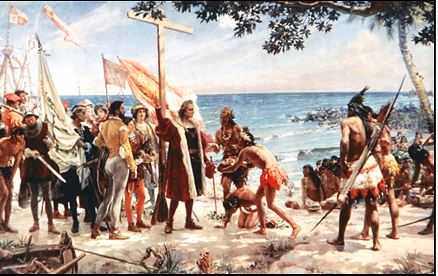
Discovery of Jamaica
The Discovery of Jamaica
On May 5, 1494, Christopher Columbus, the European explorer, who sailed west to get to the East Indies and came upon the region now called the West Indies, landed in Jamaica. This occurred on his second voyage to the West Indies. Columbus had heard about Jamaica, then called Xaymaca, from the Cubans who described it as “the land of blessed gold”. Columbus was soon to find out that there was no gold in Jamaica.
On arrival at St Ann’s Bay, Columbus found the Arawak Indians inhabiting the island. Initially, Columbus thought these Indians were hostile, as they attacked his men when they tried to land on the island. As he was determined to annex the island in the name of the king and queen of Spain, he was not deterred. Columbus also needed wood and water and a chance to repair his vessels. He sailed down the coast and docked at Discovery Bay. The Arawaks there were also hostile to the Spaniards. Their attitudes changed, however, when they were attacked by a dog from one of the Spanish ships and Columbus’ cross-bow men. Some of the Arawaks were killed and wounded in this attack. Columbus was then able to land and claim the island.
The Spaniards, when they came, tortured and killed the Arawaks to get their land. They were so overworked and ill-treated that within a short time, they had all died. The process was aided by the introduction of European diseases to which the Arawaks had little or no resistance.
The island remained poor under Spanish rule as few Spaniards settled there. Jamaica served mainly as a supply base: food, men, arms and horses were shipped here to help in conquering the American mainland.
Fifteen years later in 1509, after their first visit to the island, the first Spanish colonists came here under the Spanish governor Juan de Esquivel. They first settled in the St. Ann’s Bay area. The first town was called New Seville or Sevilla la Nueva.
Towns were little more than settlements. The only town that was developed was Spanish Town, the old capital of Jamaica, then called St. Jago de la Vega. It was the centre of government and trade and had many churches and convents.
The little attention the colony received from Spain soon led to a major reason for internal strife. This contributed to the weakening of the colony in the last years of Spanish occupation. The governors were not getting proper support from home and quarrels with church authorities undermined their control. Frequent attacks by pirates also contributed to the colony’s woes.